
Keloid steroid injections are a commonly used treatment for raised scars that cause discomfort or concerns about appearance. They can help soften and flatten keloids and relieve symptoms, but they do not guarantee complete removal or prevent every recurrence.
This guide explains how the injections work, what happens during treatment, how appointments are scheduled, and which side effects to discuss before starting.
What Are Keloid Steroid Injections?
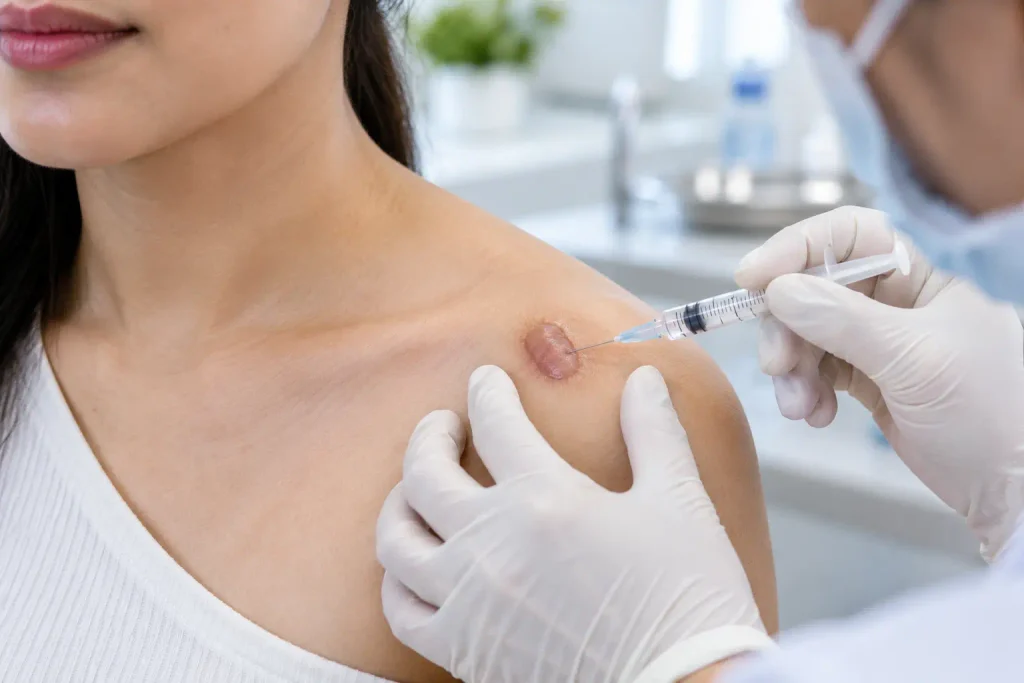
Keloid steroid injections deliver a corticosteroid directly into scar tissue. Triamcinolone acetonide, often abbreviated as TAC, is one of the most frequently used medicines.
The treatment aims to reduce inflammation and excessive scar-tissue activity. Unlike surgical excision, it does not physically remove the scar. Instead, the goal is gradual improvement in thickness, firmness, and symptoms.
Walsh et al. (2023) identify intralesional corticosteroids as a widely used first-line option. Their review also shows that the degree of improvement varies between patients and treatment protocols.
Who May Benefit From Treatment?
Injections may be considered for keloids that are raised, growing, itchy, or painful. Our guide to keloid symptoms explains these features in more detail.
A clinician should confirm the diagnosis and assess the scar’s size, location, and previous treatment response. Your priorities also matter: reducing itching may be more important to you than changing the scar’s appearance.
Steroid injections are one of several keloid scar treatment options. They may be used alone or alongside another treatment when appropriate. American Academy of Dermatology
The Keloid Injection Procedure
Treatment usually takes place in an outpatient clinic. The appointment generally includes the following steps:
- Assessment: The clinician examines the scar and reviews your medical history, medicines, allergies, and previous treatment.
- Preparation: The injection area is cleaned, and options for reducing discomfort are discussed.
- Injection: Small amounts of corticosteroid are injected into the scar. More than one injection point may be needed.
- Follow-up planning: You receive advice about aftercare and when to return for assessment.
The procedure may cause stinging or pressure. Tell your clinician if you are concerned about pain so that appropriate measures can be considered. The British Association of Dermatologists’ patient leaflet explains what intralesional steroid treatment involves.
How Effective Are Keloid Steroid Injections?
Many keloids become smaller or softer after treatment, but the response is not uniform. Improvement may involve reduced itching or tenderness as well as a change in appearance.
The American Academy of Dermatology reports that approximately 50–80% of keloids shrink after injections, while many regrow within five years. Shrinkage should therefore not be interpreted as permanent removal.
Ekstein et al. (2021) similarly emphasize recurrence and the need for individualized management. Follow-up helps determine whether to continue injections, adjust the approach, or consider another treatment.
How Often Are Injections Given?
Appointments are usually spaced several weeks apart. DermNet describes repeat treatment at intervals of approximately 4–8 weeks, but this is not a fixed schedule for every patient.
The medicine concentration, injected amount, and interval depend on the scar and its response. Walsh et al. found considerable variation in treatment schedules across studies.
Multiple sessions may be needed. Before each session, the clinician should assess improvement and check for adverse effects rather than automatically continuing the same plan.
Potential Side Effects
Possible side effects of keloid steroid injections include:
- Temporary pain, bruising, or minor bleeding.
- Skin thinning or an indentation around the treated area.
- Lighter or darker skin pigmentation.
- More visible small blood vessels.
- Less commonly, infection or impaired healing.
Some changes appear weeks after treatment. Skin indentations and pigment changes can persist, so report them before your next appointment. Significant allergic reactions are rare. DermNet: Intralesional steroid injection
Discuss your medical history beforehand, including any previous reaction to injected medicines. Treatment should not be given into an area with an active skin infection.
Aftercare and Monitoring
Follow the clinic’s instructions for the treated area. Contact the treating clinician if pain or swelling becomes worse rather than settling, or if you notice discharge or other signs of infection.
It can be useful to photograph the scar under similar lighting before appointments and note changes in itching, tenderness, or thickness. This gives you and your clinician a clearer basis for discussing progress.
Ask when you should expect a review and which changes would lead to pausing or modifying treatment. The British Association of Dermatologists provides further information on treatment risks and follow-up considerations.
Combining Injections With Other Treatments
For some scars, a combined approach may be appropriate. Options include 5-fluorouracil injections, cryotherapy for keloids, or selected laser treatments for keloid scars.
Ekstein et al. discuss these combinations as ways to address the limitations of a single treatment. However, adding another procedure does not guarantee a better outcome for every patient.
Silicone gel may also be discussed as part of ongoing scar care. Your clinician should explain the purpose and timing of each element in the plan.
How Much Do Keloid Steroid Injections Cost?
The cost depends on the clinic, location, number of scars, and proposed course of treatment. An individual estimate is more useful than a general price because the number of appointments may change with your response.
Before starting, ask:
- Is the consultation charged separately?
- Is the fee per session or per scar?
- Are follow-up visits included?
- What would additional treatments cost?
- If you have insurance, does your policy cover treatment in your circumstances?
Request an estimate for the expected course, while recognizing that the plan may need adjustment.
Questions to Ask at Your Consultation
Bring your main concerns to the appointment. Useful questions include:
- What improvement is realistic for my scar?
- How will we measure whether treatment is working?
- What are the risks for my skin tone?
- When would we stop or change treatment?
- What would happen if the keloid returned?
Keloid steroid injections can be a useful part of scar management when the goals and limitations are clear. Book a consultation to confirm the diagnosis and discuss a treatment plan suited to your scar, symptoms, and preferences.
Read Also / See Related
- Laser for keloid scars — Explore a treatment that may be discussed alongside steroid injections, including its potential benefits and limitations.
- Why is my scar getting bigger? — Learn when continued scar growth deserves reassessment, including after treatment.
- Silicone gel for keloids — Understand where silicone-based care may fit into a broader treatment plan.
References
- Walsh LA, Wu E, Pontes D, et al. Keloid treatments: an evidence-based systematic review of recent advances. Systematic Reviews. 2023;12:42. doi: 10.1186/s13643-023-02192-7.
- American Academy of Dermatology Association. Keloid scars: Diagnosis and treatment. Available at: https://www.aad.org/public/diseases/a-z/keloids-treatment.
- British Association of Dermatologists. Intralesional steroid therapy. Available at: https://www.bad.org.uk/pils/intralesional-steroid-therapy.
- Ekstein SF, Wyles SP, Moran SL, Meves A. Keloids: a review of therapeutic management. International Journal of Dermatology. 2021;60(6):661–671. doi: 10.1111/ijd.15159.
- DermNet. Intralesional steroid injection. Available at: https://dermnetnz.org/topics/intralesional-steroid-injection.
Medical disclaimer
The information in this article is provided for general educational purposes and does not replace professional medical advice, diagnosis, or treatment. Consult a dermatologist or another qualified healthcare professional about your symptoms and treatment options. Do not disregard professional medical advice or delay seeking care because of information you have read on KeloidCare.org. Responses to keloid treatments vary, and individual results cannot be guaranteed.
[…] Steroid Injections […]
[…] Steroid Injections […]
[…] Steroid Injections […]
[…] Steroid Injections […]