

Keloids on the ear can develop after piercings, surgery, or other skin injuries. These raised scars may cause itching, tenderness, or concerns about appearance, and they can continue growing beyond the original injury.
Treatment can improve their size and symptoms, but recurrence remains possible. Understanding the difference between a keloid and other piercing-related bumps is an important first step toward choosing appropriate care.
What Is an Ear Keloid?
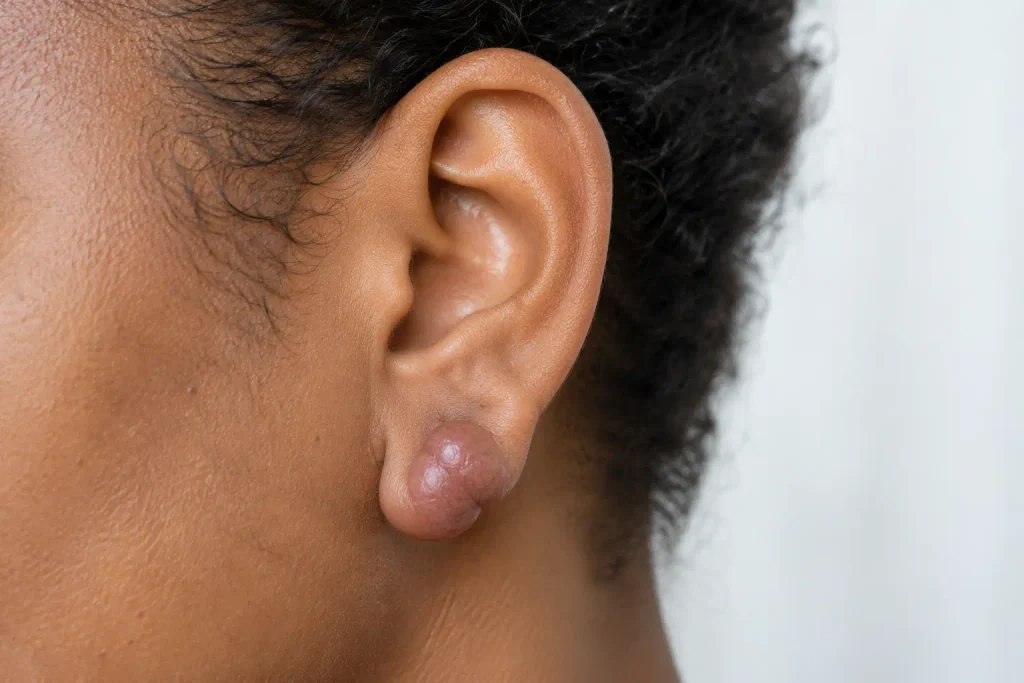
A keloid is an overgrowth of scar tissue that extends beyond the boundaries of the original wound. Unlike hypertrophic scars, which remain within those boundaries, keloids can spread into surrounding skin.
They may affect the earlobe or other parts of the ear. Their appearance varies, and they are not always red or painful. Common keloid symptoms include a firm, raised texture, itching, and tenderness.
Ekstein and colleagues’ review of keloid management describes these scars as the result of an abnormal wound-healing response and emphasizes their tendency to recur.
What Causes Keloids on the Ear?
Ear piercing is a common trigger because it creates an injury that must heal. However, not everyone who has a piercing develops a keloid. Individual susceptibility, including a personal or family history of keloids, influences the risk.
The explanation is more complex than the thickness or blood supply of earlobe skin. In their review of keloid biology, Limandjaja and colleagues describe abnormal fibroblast activity, inflammation, and excessive tissue deposition as interconnected features of keloid formation.
A piercing performed carefully can still lead to a keloid in a susceptible person. Good technique and aftercare reduce avoidable complications but cannot eliminate that underlying tendency.
Is a Piercing Bump Always a Keloid?
No. A bump around a piercing may reflect irritation, infection, an allergic reaction, or another type of scar.
A keloid typically grows beyond the original piercing injury and persists. However, appearance alone is not always enough to distinguish these conditions. The American Academy of Dermatology’s diagnostic guidance notes that reactions to jewelry can resemble keloids.
If the area becomes hot, increasingly painful, markedly swollen, or produces pus, seek prompt medical assessment. According to NHS guidance on infected piercings, jewelry should generally remain in place when infection is suspected unless a doctor advises removal.
Do not squeeze, cut, or attempt to drain a suspected keloid yourself.
How to Reduce the Risk After Ear Piercing
For someone with a history of keloids, avoiding another piercing is the most effective way to avoid a new piercing-related trigger. The American Academy of Dermatology’s prevention advice recommends particular caution when you or a blood relative has developed a keloid.
If you choose to proceed:
- Use a qualified piercer who follows appropriate hygiene and sterilization practices.
- Discuss jewelry materials, especially if you have a known metal allergy.
- Follow the recommended aftercare routine.
- Avoid unnecessary pulling, rubbing, or pressure from poorly fitting jewelry.
- Arrange an assessment if the skin begins thickening or a bump continues growing.
Routine piercing care and prescribed pressure therapy are different. Do not try to prevent a keloid by tightening ordinary earrings against the skin.
Treatment Options for Keloids on the Ear
The best approach depends on the scar’s size, location, symptoms, and previous treatment. Our keloid scar treatment guide explains the broader range of options.
Pressure Earrings
Specialized pressure earrings or clips apply controlled compression. They are particularly relevant after surgical removal of an ear keloid.
A 2024 systematic review by Tahir and colleagues supports compression as a postoperative option, although differences between studies and the use of additional treatments limit comparisons.
The device should be fitted and monitored by the treating team. Wear schedules often extend over several months, and comfort and skin tolerance affect whether the plan is practical. Pressure should not be increased without advice.
For an overview of combined treatment approaches, see our guide to keloid removal.
Silicone Sheets and Gel
Silicone sheets and silicone gel for keloids may be included in scar care. They help maintain hydration over healed skin, but they should not be described as reliably removing an established keloid.
The 2023 Cochrane review of silicone gel sheeting found very low-certainty evidence and could not establish its effectiveness compared with the treatments studied.
Use silicone only after the skin has healed and according to your clinician’s instructions.
Corticosteroid Injections
Keloid steroid injections are commonly used to soften and flatten scar tissue and reduce symptoms. Treatment may involve several appointments, with the response reviewed before further injections.
Possible side effects include discomfort, skin thinning, and pigment changes. As discussed in Ekstein and colleagues’ review, injections may be used alone or as part of a combined treatment plan.
Surgical Removal
Surgical excision may be considered for selected large or troublesome ear keloids. However, removing the visible scar does not remove the tendency to develop another one.
A postoperative plan may include injections, pressure earrings, or other treatment selected for the individual case. The Nippon Medical School protocol described by Ogawa and colleagues illustrates a specialist approach involving surgical planning and additional therapies. Its use of postoperative radiotherapy requires specialist assessment rather than routine application to every ear keloid.
Can Ear Keloids Return After Treatment?
Yes. Keloids on the ear may return after flattening or removal, sometimes months or years later. There is no single recurrence rate that applies to every treatment or patient.
The compression-therapy review by Tahir and colleagues found promising postoperative outcomes but insufficient evidence to determine which compression-based approach is best. This supports discussing the full treatment and follow-up plan rather than relying on one advertised success percentage.
Attend review appointments and report renewed thickening, itching, or growth. Early reassessment allows your clinician to decide whether the plan needs adjustment.
Can You Pierce the Ear Again After Treatment?
A new piercing creates another injury and may trigger another keloid. Successful treatment does not make future piercing risk-free.
Before re-piercing, discuss your history with the treating clinician. The American Academy of Dermatology advises people with a tendency to form keloids to avoid ear piercing.
Choosing the Next Step
Keloids on the ear can often be made smaller or more comfortable, but treatment requires realistic expectations and attention to recurrence. A growing piercing bump should be assessed before choosing products or procedures.
Book a consultation to confirm the diagnosis and discuss a plan suited to your scar, symptoms, and preferences.
Read Also / See Related
- Newly formed keloid scars — Learn about early assessment and treatment options when a raised scar develops after a piercing.
- Keloid removal — Explore removal options and why preventing regrowth is an important part of treatment planning.
- Keloid symptoms — Understand common features such as itching, tenderness, and growth beyond the original injury.
References
- Ekstein SF, Wyles SP, Moran SL, Meves A. Keloids: a review of therapeutic management. International Journal of Dermatology. 2021;60(6):661–671. doi: 10.1111/ijd.15159.
- Limandjaja GC, Niessen FB, Scheper RJ, Gibbs S. The keloid disorder: heterogeneity, histopathology, mechanisms and models. Frontiers in Cell and Developmental Biology. 2020;8:360. Available at: https://pmc.ncbi.nlm.nih.gov/articles/PMC7264387/.
- American Academy of Dermatology Association. Keloid scars: Diagnosis and treatment. Available at: https://www.aad.org/public/diseases/a-z/keloids-treatment.
- NHS. Infected piercings. Available at: https://www.nhs.uk/conditions/infected-piercings/.
- American Academy of Dermatology Association. Keloid scars: Self-care. Available at: https://www.aad.org/public/diseases/a-z/keloids-self-care.
- Tahir SM, Ihebom D, Simman R. Compression therapy for keloid scars: a systematic review and meta-analysis. Plastic and Reconstructive Surgery – Global Open. 2024;12(6). doi: 10.1097/GOX.0000000000005864.
- Tian F, Jiang Q, Chen J, Liu Z. Silicone gel sheeting for treating keloid scars. Cochrane Database of Systematic Reviews. 2023;1. doi: 10.1002/14651858.CD013878.pub2.
- Ogawa R, Dohi T, Tosa M, Aoki M, Akaishi S. The latest strategy for keloid and hypertrophic scar prevention and treatment: The Nippon Medical School (NMS) protocol. Journal of Nippon Medical School. 2021;88(1):2–9. doi: 10.1272/jnms.JNMS.2021_88-106.
Medical disclaimer
The information in this article is provided for general educational purposes and does not replace professional medical advice, diagnosis, or treatment. Consult a dermatologist or another qualified healthcare professional about your symptoms and treatment options. Do not disregard professional medical advice or delay seeking care because of information you have read on KeloidCare.org. Responses to keloid treatments vary, and individual results cannot be guaranteed.
[…] Ear Keloids & Piercings […]